June to September brings access restrictions, saturated ground, roof discharge and wind-driven rain that can disrupt tray installation in Shikrapur. By the end, you will have a sequence for site readiness, material selection, tray sizing, purchase-order specification, receipt inspection and post-monsoon acceptance.
Key takeaways
- Use IMD outlooks and live Shikrapur forecasts, not fixed June–September dates.
- Match tray material and finish to water, chemicals, sunlight and exposure.
- Specify width, load, support spacing, finish and fittings before requesting quotes.
- Accept installation only after checking drainage, bonding, covers and water-exposed areas.
What must you complete before, during and after the Shikrapur monsoon?
Complete cable tray monsoon planning in three weather-linked stages, using the India Meteorological Department seasonal outlook and Shikrapur district forecast rather than treating June–September as a guaranteed timetable.
1. Before repeated rain begins, finish route surveys and coordinate tray elevations with storm-water channels and roof drainage. Complete support foundations, pedestal elevations, anchor installation, concrete curing, drainage falls, earthing connections and inspection of outdoor routes. Keep trays clear of downpipe discharge, and confirm the finished flood level before delivery and installation.
2. During rain, inspect standing water, trench flooding, roof leakage, access roads, crane and forklift movement, temporary storage, support settlement and mud around anchors. Stop lifting or cable pulling when access, lifting stability or electrical safety is compromised. Do not load materials onto saturated paving or leave components where runoff can reach them.
3. After exposure, check for displaced supports, tilted sections, silt-filled perforations, trapped water, damaged zinc, loose couplers, wet cable entries and water reaching joints or terminations. Photograph each defect and record rainfall-related stoppages, inspections and remedial work before loading cables.
Confirm that covers, fittings, support steel and safe access are available; a straight-tray delivery alone cannot produce a usable installation.
How should you choose a tray system for each wet or exposed zone?
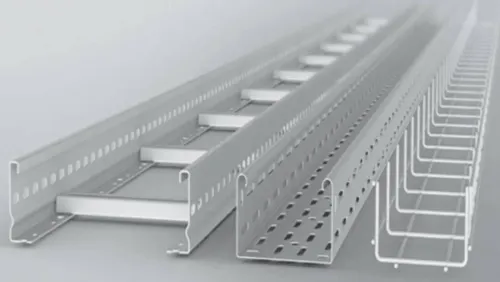
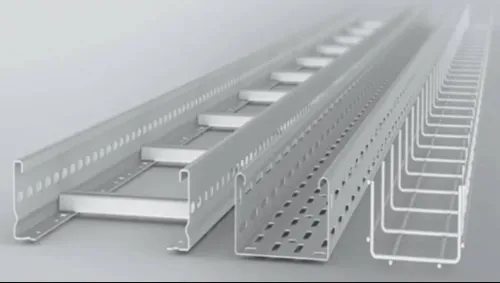
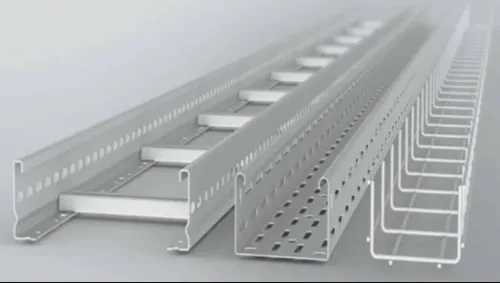
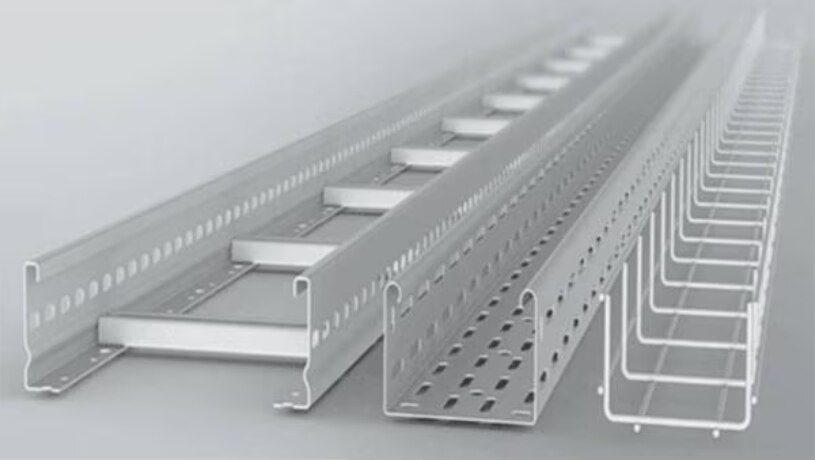
Use a GI perforated cable tray in a drained route where cable inspection and ventilation matter. Its openings improve drainage and reduce standing water, but they do not weatherproof joints, glands, terminations or vertical risers.
| Option | Main advantage | Use it when |
|---|---|---|
| GI perforated tray | Drainage, ventilation and easy inspection | The route is elevated, drained and outside direct downpipe discharge |
| Ladder tray | Supports heavy cables, large bend radii and lower material contact | Wide openings and underside inspection justify reduced cable support |
| Covered tray | Shields cables from rain, dust, birds and roof discharge | Falling or wind-driven contamination threatens an exposed route |
A covered tray is not a universal upgrade. Provide drainage and maintenance access because the cover can hide damaged cables and retain contaminated moisture. Where a tray crosses storm-water discharge, define its elevation, splash protection and post-monsoon inspection access instead of relying on the cover alone.
For a GI perforated cable tray Shikrapur project, protect vulnerable entries with enclosures, drip loops and a stated ingress-protection approach.
Specify a different corrosion-protection system for chemical fumes, industrial pollutants, wash-down areas, splash zones or permanently wet locations; do not request only “GI.” Pre-galvanized steel can expose cut or drilled edges, while hot-dip galvanizing after fabrication protects completed steelwork when drain and vent holes are correctly designed.
Reject an open GI system where:
- The route remains submerged.
- Cables require enclosure or the route crosses a high-impact area.
- The project requires a stated fire-resistance or environmental rating that open tray cannot provide.
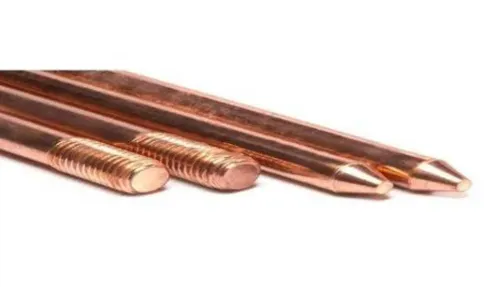
Treat copper-to-galvanized joints with compatible lugs, washers, plating or approved interface compound to control galvanic corrosion.
How do you size and specify trays before requesting quotations?
Use the cable schedule as the design input, not the cable name alone. Group each cable by voltage, function, heat dissipation and required separation, then measure its actual outside diameter before calculating occupied tray width.
1. Add spare capacity stated as a percentage or clear width, then allow for cable bend radius at elbows and risers, cleat positions, separation barriers and access clearance. A tray that fits the straight run can still fail at a riser.
2. Calculate cable weight per metre and compare it with the manufacturer’s load/span table for the selected tray width, support spacing, splice arrangement and permitted deflection criterion. Request the table and maximum support spacing with every quotation.
3. Write the purchase order as separate schedule lines for tray, covers, reducers, tees, elbows, risers, bends, splice plates, couplers, supports, anchors, bonding hardware and compatible fasteners. State material, corrosion system, thickness, flange height, perforation pattern, straight-section length and bend radius.
4. State whether the tray will serve as a protective bonding conductor, and identify bonding jumpers required at expansion joints, flexible connections and painted interfaces. Include touch-up compound, expansion-joint hardware and support steel; a cable tray manufacturer in Shikrapur monsoon procurement must not supply only straight sections.
5. Reserve raised storage above saturated ground, specify rain-resistant packaging and allow time for inspection, rework, weather windows and crew rescheduling. Do not base the programme on an unverified delivery promise.
What evidence and checks should you demand at delivery?
1. Before unloading, demand the galvanizing or coating specification, material grade, batch or heat identification, inspection report, coating-thickness evidence where specified, approved drawings, load/span tables and dispatch packing list. Do not accept “GI” as a complete finish description.
2. Confirm the fabrication sequence. Pre-galvanized sheet can expose steel at cut, drilled or welded areas, while hot-dip galvanizing after fabrication coats the completed steelwork, provided drain and vent holes were correctly designed. Record the batch identity against the delivery documents.
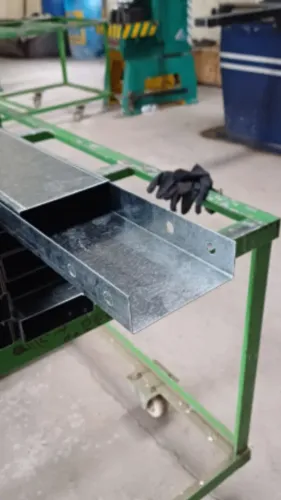
3. Inspect each component before installation. Quarantine sections with deep scratches, bright exposed steel, blocked perforations, distorted flanges or cracked welds. Check straight sections, bends, tees, reducers, covers, splice plates, supports and bonding parts against the approved schedule.
4. Reject missing fittings and fasteners that are incompatible with the specified finish. A straight tray shipment is incomplete if covers, couplers, support steel, bonding hardware or expansion-joint parts are absent.
5. Clean and repair damaged zinc only with a compatible zinc-rich system approved by the project galvanizing specification. Never leave a cut edge, drilled hole or field weld untreated; early red rust can begin there while the main surface still appears sound.
A buyer comparing a cable tray manufacturer in Shikrapur, including for a GI perforated cable tray Shikrapur order, should use this evidence-based receipt process rather than judge quality by appearance.
Electrotech Industries belongs on the comparison list only when its quotation, drawings, finish evidence, batch records and complete component schedule satisfy the stated exposure and load requirements.
Related products
 | Cable Tray Manufacturer In Pune – GI Perforated Cable Trays for Reliable Cable Management A trusted cable tray manufacturer offering a wide range of GI... View product → |
 | GI Perforated Cable Tray Manufacturer in Pune – Electrotech Industries Electrotech Industries is a trusted manufacturer and supplier of GI Perforated Cable Trays, crafted... View product → |
What must be accepted after installation and water exposure?
Release the route for cable pulling only after a post-rain inspection closes structural, drainage, bonding and access defects. A dry-looking tray can still conceal settled anchors, trapped water or a failed splice.
1. Check horizontal runs for a deliberate drainage path. Keep splices away from low points and drain outlets, and confirm clearance from roofs, floors, walls, storm-water channels and downpipes.
2. Check vertical runs for cleats and supports that stop cable weight or moving water from loading a splice. Verify support spacing, anchor stability after soil saturation, pedestal elevation, tray alignment, flange continuity, cover fit, cable separation, bend-radius clearance and unobstructed perforations.
3. Confirm bonding jumpers across expansion joints, flexible connections, painted interfaces and other discontinuities wherever the earthing design requires them. Under an IS 3043-based design, connect the route to the site protective-earthing network with documented conductor size, termination method and test points; a local electrode beside the tray does not prove a fault-return path.
4. Control wet copper-to-galvanized interfaces with compatible lugs, washers, plating or approved interface compound. Ordinary hardware can accelerate galvanic corrosion at the joint.
Record defects with a location reference, photograph, responsible party, repair approval and closure date. The handover file must include photographs before and after rain, delivery documents, inspection results, drainage observations, continuity and earthing records, punch-list closures and repair approvals.
For an industrial cable tray shikrapur route, accept the installation only when this file shows that monsoon rework is closed before cables conceal the defects.
Frequently asked questions
What must you complete before, during and after the Shikrapur monsoon?
Before rain, freeze the route, supports, drainage, material, finish and inspection plan. During rain, protect stored components, inspect waterlogged areas and stop unsafe work. After rain, check corrosion, standing water, fasteners, covers, cable separation and earthing continuity.
How should you choose a tray system for each wet or exposed zone?
Use the exposure zone to select the tray material, coating and cover arrangement. Compare pre-galvanized steel, hot-dip galvanized steel, stainless steel and non-metallic systems against water, soil, chemicals, sunlight and required bonding. Use covers where falling water, debris or UV exposure threatens the cables.
How do you size and specify trays before requesting quotations?
List every cable’s outside diameter, quantity, weight, voltage class and bend radius. Add installation clearance, future capacity and the manufacturer’s fill limit, then specify tray width, side-rail height, thickness, load, support span, finish, fittings and accessories.
What evidence and checks should you demand at delivery?
Request the purchase specification, packing list, material or coating certificates, dimensional records, batch identification and delivery inspection report. Check tray dimensions, finish, perforations, bends, couplers, covers, fasteners and visible damage against the approved submittal.
What must be accepted after installation and water exposure?
Verify route, support spacing, level, joint tightness, cable separation, bend-radius clearance, covers, drainage and mechanical protection. Test metallic continuity and bonding across joints, record defects, remove standing water and close the inspection only after corrective work.
Related product
 | GI Ladder Cable Tray Manufacturer in Pune – Electrotech Industries Electrotech Industries is a leading manufacturer and supplier of high-quality GI Ladder Cable Trays,... View product → |
Keywords