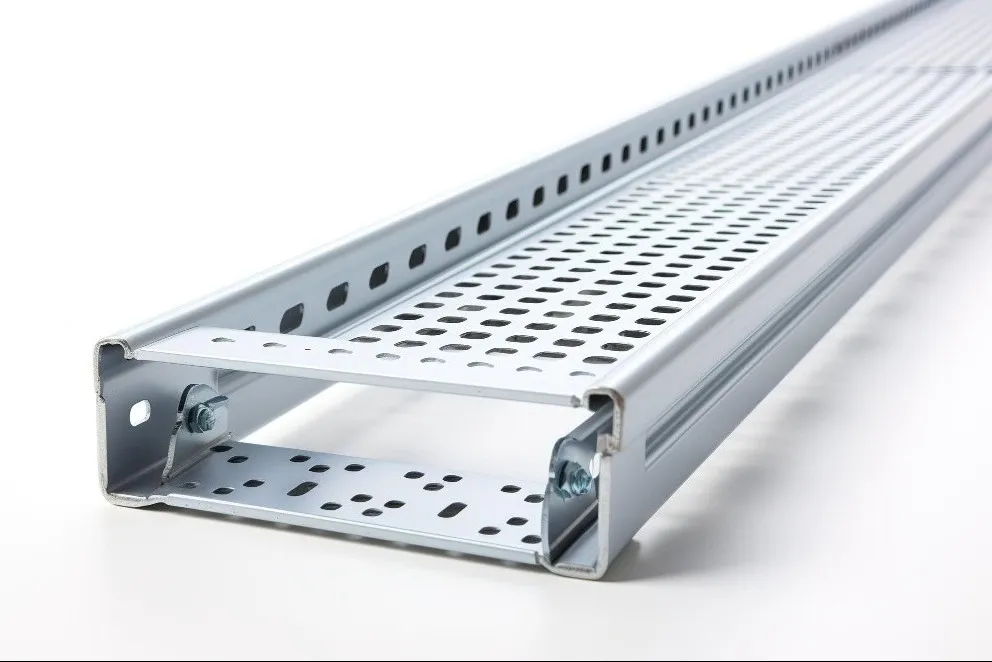
Choosing between perforated and ladder cable trays can appear straightforward until actual cable loads, installation conditions, maintenance needs, and routing requirements are considered.
For industrial buyers evaluating a Cable Tray Manufacturer in Nashik, understanding the practical differences between these configurations helps create a more suitable specification.
How Perforated Cable Trays Work
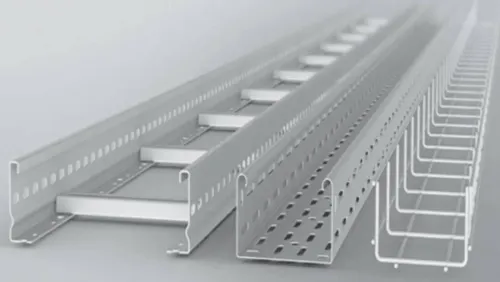
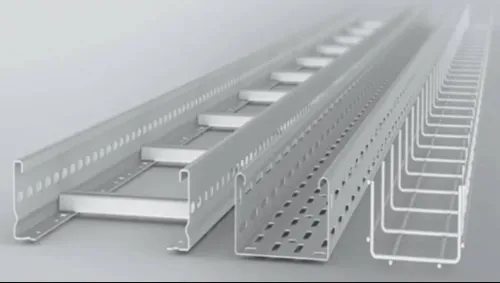
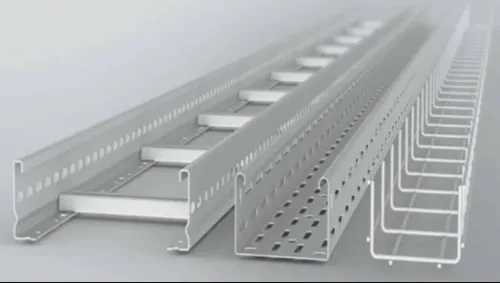
Perforated trays provide a relatively continuous supporting base containing ventilation openings.
They can be useful where cables benefit from continuous support while still requiring airflow. Their construction also provides an organised route that can be accessed during inspection or modification.
Typical suitability depends on cable type, dimensions, loading, installation conditions, and engineering requirements.
How Ladder Cable Trays Differ
A ladder cable tray consists primarily of two longitudinal side members connected by transverse rungs.
The open construction provides ventilation and straightforward cable access. Ladder trays are commonly considered for industrial power cable routing and applications involving substantial cable runs.
The correct rung spacing, tray dimensions, support arrangement, and construction should be determined according to the intended load and project specification.
Which One Should You Choose?
There is no single answer for every project.
Consider these questions:
- What types of cables will be installed?
- What is the expected cable load?
- How much support do the cables require?
- Is ventilation an important consideration?
- Will cables need frequent access?
- Is the route indoors or outdoors?
- What support spacing is planned?
- Are there consultant-approved specifications?
- Will future cable additions be expected?
These factors provide a more reliable basis for selection than simply choosing whichever tray type was used on a previous project.
Accessories Can Influence the Decision
Tray configuration should also work with the complete routing layout.
Projects may require horizontal and vertical bends, tees, reducers, couplers, covers, and other components. Complex industrial routes around machines and services can make accessory planning especially important.
Electrotech Industries manufactures cable management components for project requirements where tray type, dimensions, accessories, and installation conditions need to be coordinated.
Nashik has a substantial industrial base, and electrical infrastructure in manufacturing facilities may need to accommodate machinery, utilities, automation systems, and future expansion. A cable tray system should therefore be viewed as part of the facility's long-term electrical infrastructure.
Before requesting quotations, preparing a clear schedule of sizes, quantities, materials, finishes, and accessories can help manufacturers provide more relevant commercial and technical responses.
Keywords